
AI Remixes in YouTube Shorts: How Reimagine Redefines Original Content in 2026
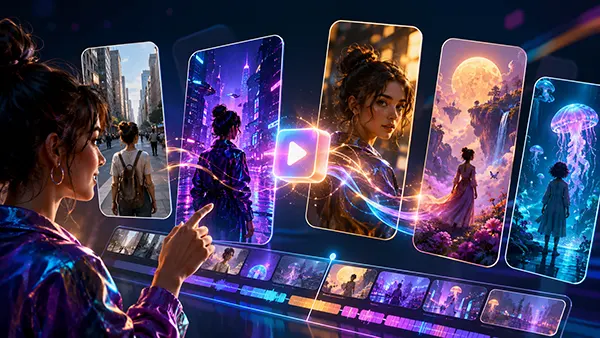
Generative AI has moved from being an optional production aid to becoming part of the creative process inside YouTube Shorts itself. One of the clearest examples in 2026 is Reimagine, an AI-assisted remix feature introduced by YouTube in March. Instead of simply borrowing a sound, showing another creator’s video beside your own or inserting a short extract, Reimagine can take a frame from an eligible Short and generate a new scene from it. This changes an important assumption about online originality. A creator no longer has to start with entirely self-recorded footage for the finished Short to contain substantial new creative work. At the same time, using generative tools does not automatically make a remix original, valuable or suitable for monetisation. The more useful question in 2026 is therefore not simply where the source material came from, but what the new creator actually contributes to it.
What Reimagine Changes in the YouTube Shorts Creation Process
YouTube introduced Reimagine on 18 March 2026 as a new option within the Remix tools for eligible Shorts. The original version was described as a way to take a single frame from an existing Short and transform it into a new AI-generated clip of around eight seconds. The feature was introduced with Google’s Veo video-generation technology, meaning that the selected frame acts as a visual starting point rather than footage that is simply copied into another video. A creator can describe what should happen next or how the scene should change, and the resulting sequence can differ considerably from the source image. A normal street scene, for example, could become a stylised historical setting, while an ordinary object could be placed into a completely different visual situation.
The current Reimagine workflow gives creators more control than the initial launch description alone might suggest. On an eligible Short, the user selects Remix and can enter a custom English-language prompt or choose one of the suggestions generated for the scene. YouTube’s current help documentation also allows up to three reference photographs from the user’s gallery to guide the transformation. These photographs can help place a person, animal or object into the generated sequence. Reimagine also creates audio that reflects the prompt and the context of the generated scene. Once the result is ready, it can still be edited with normal Shorts creation tools before publication. As of August 2026, YouTube describes the feature as supporting English and English-language prompts while access continues to expand.
This workflow matters because the source Short does not disappear from the creative history of the new video. Reimagined Shorts link back to the original work, giving viewers a direct route to the video that supplied the starting frame. Attribution therefore becomes part of the feature rather than something that depends entirely on the person making the remix. That does not mean the original creator and the remix creator have made the same work. The source creator provides the visual starting point, while the second creator can determine the prompt, reference images, direction of the scene, additional editing and final context. Reimagine effectively separates source attribution from creative authorship: both can exist in the same Short without pretending that the AI-generated result appeared without a source.
From Sampling Existing Footage to Generating a Different Scene
Earlier Shorts remix tools generally made the relationship between source and remix easy to see. Cut can use a short section of an eligible video, Green Screen can place another video behind the creator, and Collab can show source material alongside newly recorded footage. These formats alter the presentation, but much of the sampled material remains recognisable. YouTube had already started moving beyond that model with AI-assisted features such as Extend with AI, which can generate a continuation from a selected moment in an eligible Short. Reimagine pushes the idea further because a frame can become the basis for footage that was never recorded by the original uploader or the person making the remix.
The result is a different type of creative relationship. With conventional sampling, viewers can normally identify which section came from the source and which section was added later. In an AI remix, that line may exist at the level of provenance rather than appearance. A source frame can provide the composition, person, object or setting, while generative AI changes movement, environment, lighting, action and sound. The remix may therefore look substantially different even though its starting point remains another creator’s work. This is why the automatic source link is important: visual difference alone would otherwise make the relationship between the two videos difficult for an ordinary viewer to recognise.
For creators, this means the prompt becomes more than a simple instruction to a software tool. It functions rather like a creative brief. “Make this cinematic” may produce a visually different clip, but it gives little evidence of a distinctive idea. A more deliberate concept can alter the meaning of the source: changing the location to support a joke, building a fictional continuation of a scene, adapting a visual trend to a specific subject, or using reference images to create a recognisable narrative. Reimagine reduces the amount of manual production needed to achieve these changes, but it does not remove the difference between a generic transformation and a purposeful remix. Originality increasingly depends on the decisions surrounding the generated footage rather than on generation alone.
Why Originality Now Depends More on Creative Decisions
Reimagine makes the familiar distinction between “original” and “reused” video less useful when taken literally. A Short can begin with somebody else’s eligible video and still contain a new concept, prompt, sequence, voice-over, narrative or edit. Conversely, a creator can produce technically new AI footage while contributing almost no distinctive idea of their own. Generating hundreds of similar clips from slightly changed prompts would create new files, but that alone would not make every upload meaningful original work. In practical terms, originality in 2026 is better judged by the creator’s contribution: what was selected, changed, explained, performed, written or arranged, and whether those choices make the resulting Short noticeably different in purpose or experience.
YouTube’s monetisation rules reinforce that distinction. Its channel monetisation policies require original and authentic content, while repetitive or mass-produced material can fall under the rules for “inauthentic content”. YouTube renamed its former repetitious-content policy in July 2025 to make the treatment of repetitive and mass-produced material clearer. The separate reused-content policy continues to apply to material such as clips, compilations, commentary and reaction videos. For Shorts revenue sharing, YouTube also identifies unedited reuploads, clips taken from other sources without meaningful additions and compilations containing no original contribution as examples of content that can produce ineligible views. AI generation therefore does not provide an automatic route around originality requirements.
Copyright and commercial rights remain a separate issue from the amount of creative effort involved. YouTube states that creators seeking to monetise videos or Shorts must have the necessary rights for the visual and audio elements they use commercially. A remix tool can make certain source material technically available for remixing inside YouTube, but creators should not treat every AI transformation as proof that every possible subsequent use is unrestricted. Community Guidelines also continue to apply to AI-generated material. The safest working assumption is that Reimagine is a creation method, not a replacement for normal responsibility. The creator still decides whether to publish the generated clip and remains responsible for the finished Short.
Credit, Creator Control and the Boundaries of AI Remixing
Automatic attribution is one of the strongest differences between Reimagine and AI workflows built around downloaded material. Every Reimagined Short is designed to link directly to the source work. This gives the original uploader visible credit and may also send viewers towards the original video. It creates a clearer chain between inspiration and transformation, which becomes increasingly important when the finished images bear little resemblance to the starting frame. Attribution, however, should not be confused with a guarantee of originality or monetisation. A source link explains where a remix began; it does not demonstrate how much creative value the second creator added.
Creators of source videos also retain an important degree of control because remixing depends on Shorts sampling settings and eligibility. YouTube Studio allows creators to manage whether their videos can be sampled for Shorts, and not every video is available for every remix option. For people publishing original footage, this makes remix settings part of content management rather than a minor technical preference. Allowing sampling can increase the number of ways a video appears in subsequent Shorts and can lead new viewers back to the source. Restricting sampling may make more sense when the visual material is particularly sensitive, when the creator does not want scenes transformed by others, or when rights arrangements limit further use.
AI-generated likenesses add another boundary. YouTube allows people to request the removal of synthetic or altered material that realistically simulates their face or voice under its privacy processes, and it has also developed likeness-detection tools for creators. At the same time, material generated through YouTube’s own generative AI tools can receive an automatic AI disclosure, so creators do not normally need to add the altered-content disclosure manually when the generation happens through those tools. These measures do not eliminate misuse, but they make provenance and identity more visible. For viewers, that distinction matters when an AI remix looks realistic enough to be mistaken for an event that actually happened.
What Reimagine Means for Creators and Viewers in 2026
The immediate advantage of Reimagine is lower production friction. A creator who sees an interesting Short no longer needs advanced editing skills or separately generated footage to build a visual response around it. A single source frame can become the opening point for an entirely different sequence, while reference photographs make personalisation easier. This can be especially useful for humour, visual storytelling, trend responses and imaginative variations on familiar scenes. Yet lower production effort also means that many people can create similar transformations quickly. The technical ability to generate a striking clip therefore becomes less distinctive as the feature reaches more users.
That shift places more value on judgement. When visually polished AI footage is easy to produce, viewers have more reason to care about why a particular version exists. A Short with a clear joke, observation, story or creator perspective has a stronger identity than one whose only feature is an unusual AI effect. The same principle applies to trend participation. Copying a popular prompt repeatedly may generate temporary visibility, but it gives audiences little reason to associate the result with a particular creator. Using Reimagine as one part of a recognisable style, recurring idea or editorial approach is more likely to produce content that feels intentional rather than automated.
Viewer trust also becomes part of creative quality. AI-generated video can create situations that look plausible while never having occurred, so context matters more when realistic people, places or events are involved. YouTube’s AI disclosures help signal that synthetic generation was used, but creators can provide additional clarity through captions, narration or the surrounding story when a scene could otherwise cause confusion. This is particularly relevant for news-like footage, public figures, accidents, health topics or emotionally charged events. In entertainment-focused Shorts, the fictional nature of a remix may be obvious. In realistic contexts, responsible presentation requires greater care.
A Practical Standard for Original Shorts in the AI Remix Era
A useful way to assess a Reimagined Short is to ask what would remain if the AI effect itself stopped being novel. If the answer is a recognisable joke, useful explanation, personal performance, narrative choice or distinctive point of view, the creator has probably contributed something beyond generation. If the entire attraction depends on changing one source frame with a generic instruction, the creative contribution is much thinner. The strongest AI remixes tend to have a reason for using the source, a clear reason for transforming it and a reason for the viewer to care about the result. Those elements are creative decisions rather than technical features.
Creators should also review generated clips rather than treating the first result as finished work. AI can introduce strange movements, inaccurate details, inconsistent objects or audio that changes the intended meaning of a scene. A generated result may also create an unintended resemblance to a real person or make a fictional situation appear factual. Checking the output, trimming weak sections, adding context and rejecting misleading results are part of authorship. Reimagine can perform much of the visual generation, but editorial responsibility still belongs to the person who chooses what reaches the audience.
By 2026, “original content” in YouTube Shorts is increasingly defined by contribution rather than by the simple ownership of every frame. Reimagine makes that change visible because one creator’s work can become the traceable starting point for another creator’s AI-generated scene. YouTube keeps the source connection visible, labels AI-created material and continues to apply originality, authenticity, rights and monetisation requirements to the finished upload. For creators, this creates a fairly clear standard: the most defensible use of AI remixing combines transparent sourcing with meaningful human choices. Reimagine can generate the images, movement and sound, but the purpose, judgement and responsibility behind the Short still determine whether it feels like a genuine new piece of content.